
In fashion, few names feel permanent. Houses change hands, designers are swapped out, “eras” are invented and retired on a quarterly basis. Giorgio Armani was the exception. For five decades, his silhouette held: the jacket unlined, the trousers loose but precise, the evening gown pared back to its most essential form. In a way, he felt immortal, until suddenly, he wasn’t.
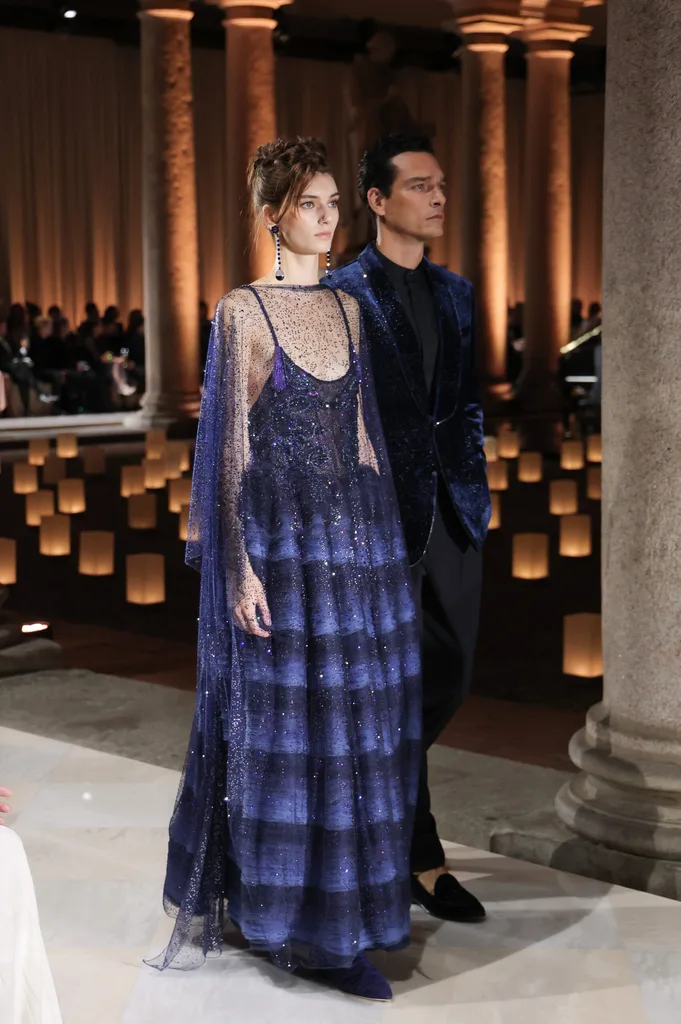
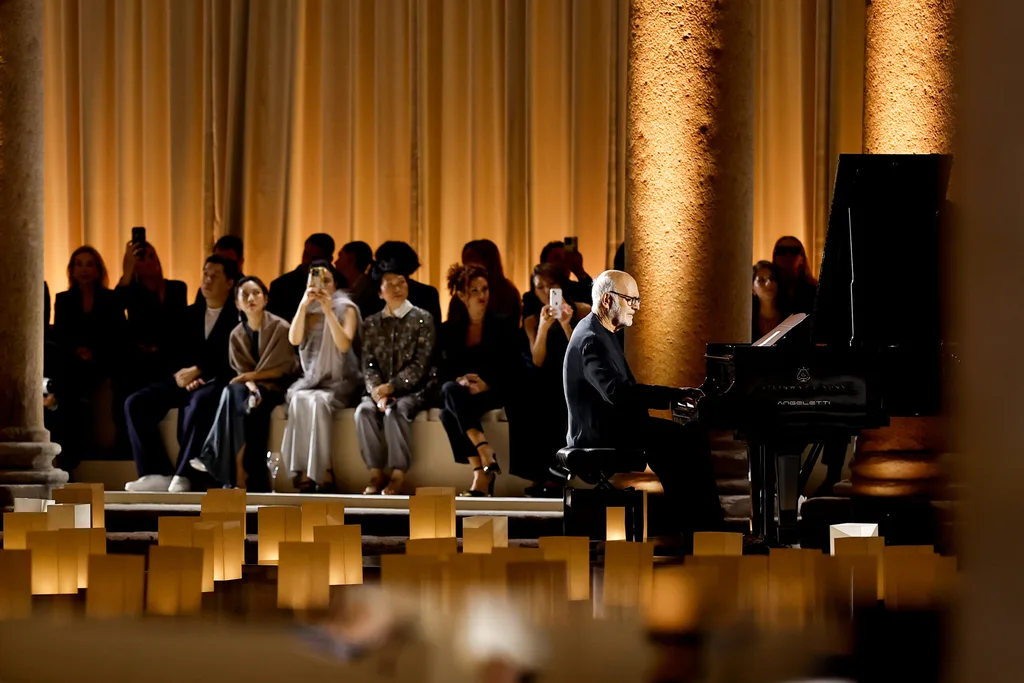
On Sunday evening in Milan, that absence was palpable. What was meant to be a milestone—50 years of Giorgio Armani—transformed into a heartfelt farewell in light of the designer’s recent passing. Guests gathered at the Pinacoteca di Brera, across from the home where Armani lived for years, and walked past an anniversary retrospective of his greatest hits: Gere’s American Gigolo suit, gowns that reshaped Hollywood’s red carpets, tailoring that collapsed the strict codes of men’s and women’s officewear. The runway was staged in the museum’s courtyard, the square space alight with paper lanterns like those that had marked his public memorial earlier this month. A lone pianist filled the courtyard with music, each note drifting against the stone walls like a quiet echo.
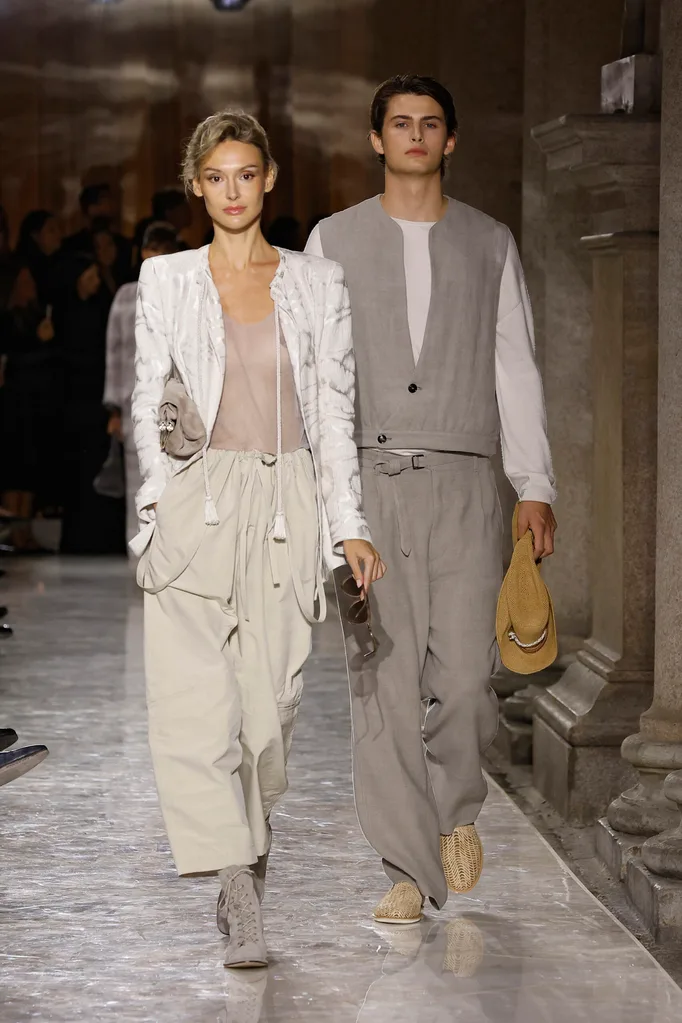
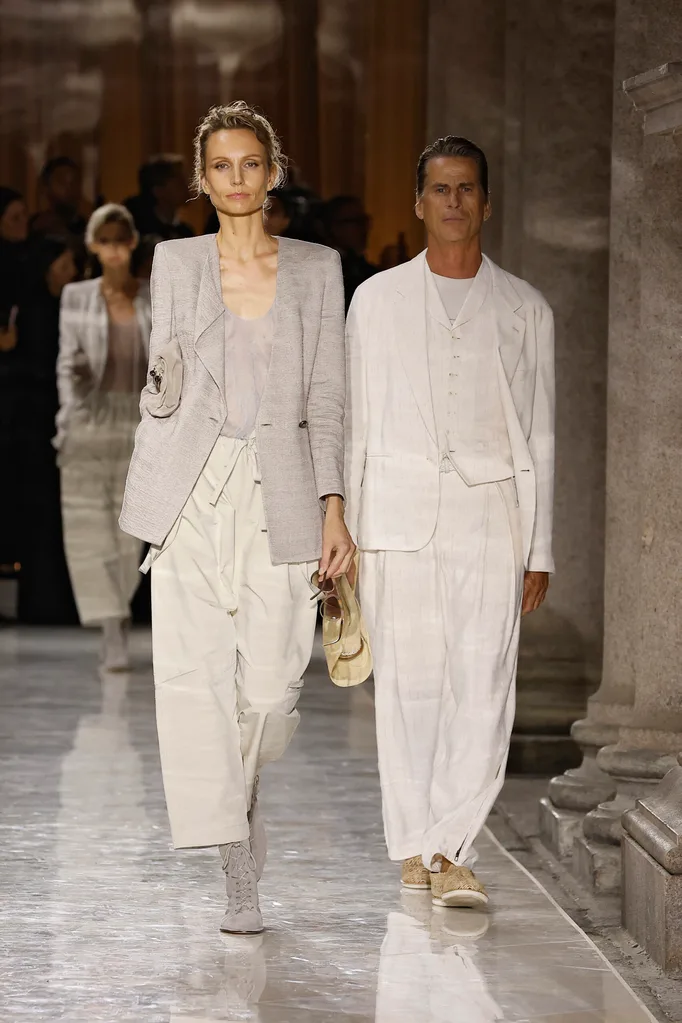
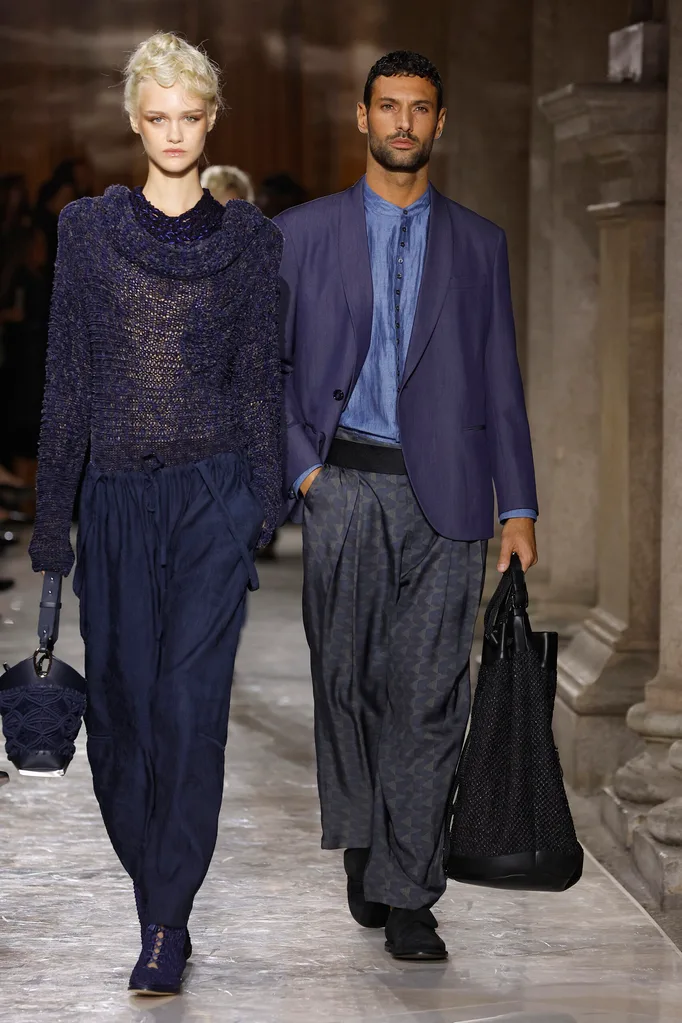
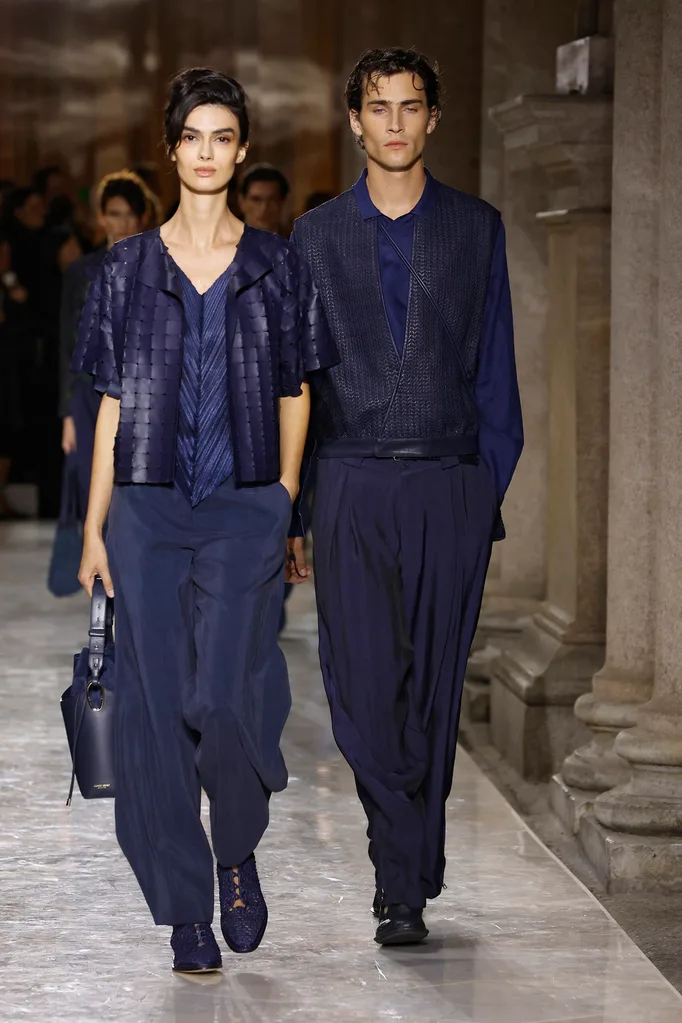
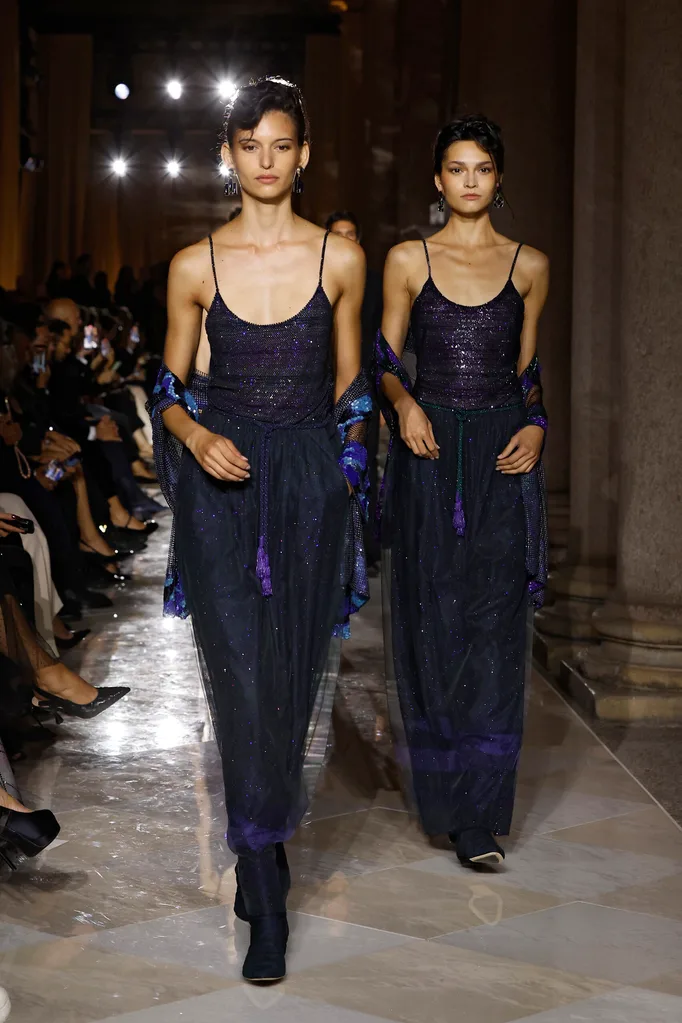
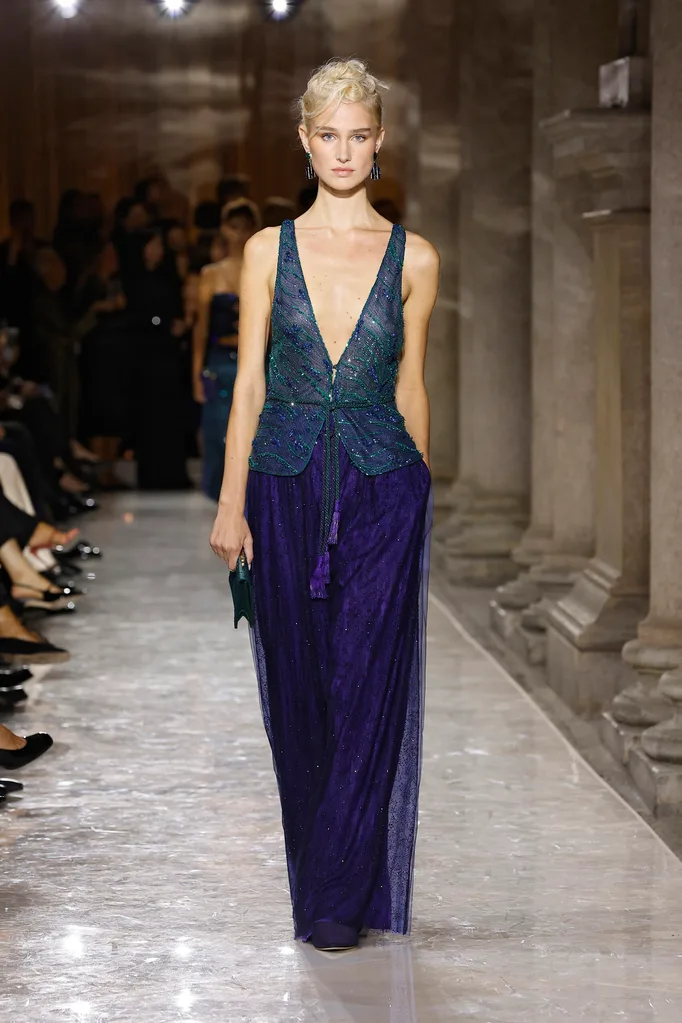
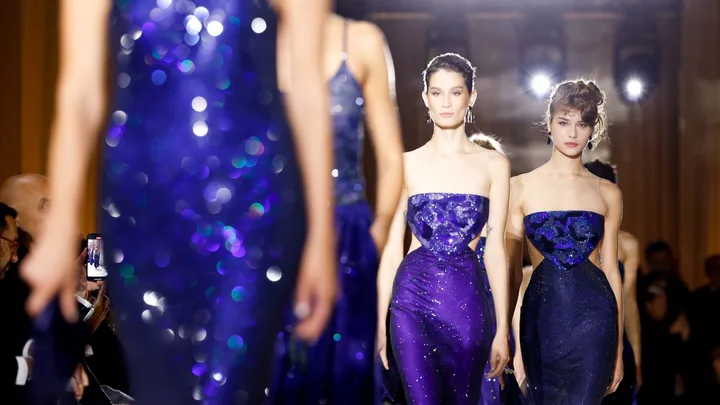
The show opened with tailoring—as Armani always did—the collection reminding you why his cuts outlasted every fad of the last half-century. Jackets with softened lines, trousers cut with ease, blouses that skimmed rather than clung. From there, a shift: fluid dresses in sea-glass blues, volcanic greens, and soft Milanese greys, colours pulled from the two landscapes he held closest—the city and his island retreat, Pantelleria. Sequins and shimmer surfaced but never overwhelmed. The gowns hung lightly, rippling in motion.
Many of the models walked in pairs, or in clustered lines, sauntering the runway like a procession. Nearly 100 looks took to the floor and yet not once did it feel excessive. Armani always knew how to hold an audience, to build cadence and flow without ever compromising on craft. Watching it unfold felt like walking through chapters of a story he had been writing for half a century.
What stood out wasn’t innovation, but intention. Armani had already changed the game—in the ’80s, when he stripped the padding from a jacket; in the ’90s, when he made “stealth wealth” a concept before it was a catchphrase. He didn’t need to prove anything here. Instead, the collection read like a closing statement: a distillation of why his clothes held such a grasp, and why they’ll continue to influence long after him.
The casting made that point clear. Models who had walked for him across decades returned, a reminder that Armani’s woman—pragmatic, sensual, never ostentatious—was never just of her time. She is timeless, and so are the clothes.
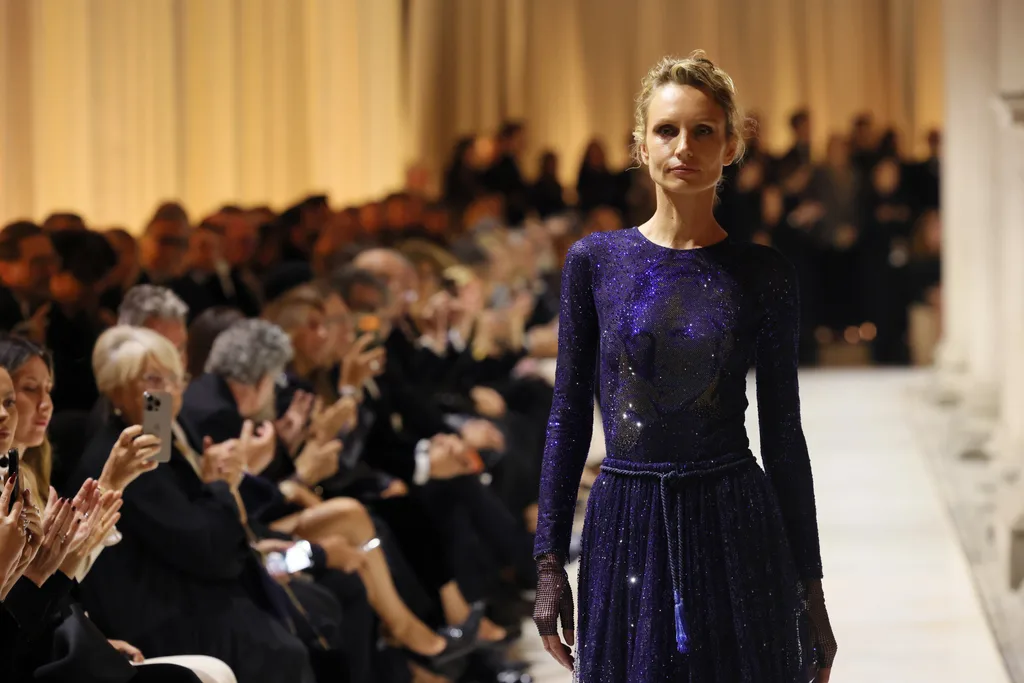
The final look—a sweeping midnight-blue gown printed with Armani’s own face—was the only overt gesture to farewell. It drew the entire room to its feet. In the audience, Cate Blanchett, Glenn Close and Richard Gere shared an emotional embrace. On the runway, Armani’s niece Silvana and his lifelong collaborator Leo Dell’Orco took their bow, standing in for the man who had always done so himself.
Endings have a way of showing up in small details such as this. Sometimes it’s the stillness that speaks loudest; the sense that what came before has quietly set the rules for what comes next. And if you’re watching closely, you might catch the trace of it long after it’s gone.
See the highlights from Giorgio Armani’s Spring/Summer 2026 show.